The Trojan War hero Odysseus sailed his army home to Ithaca when vicious north winds sent by Poseidon blew his ship off course, out to sea, and far from home. The hapless ship floated for nine days, and may have drifted forever if they hadn't landed on an island off the coast of Northern Africa. On the island lived a people who ate a food made from the flowers of the lotus. These wave-weary warriors were welcomed by the peaceful people, and were fed the lotus that made them immediately forget all desire to return home. If it hadn't been for the integrity of Odysseus, who dragged his men to the ship, locked them to their oars, and led them back to the sea toward Greece, than Homer would've told a shorter, somewhat less-epic story.
Homer's seminal work is a double-edged trimming shears for the poor lotus. On one hand, the plant is praised for providing some sort of scrumptious sustenance--a real rib-sticker. On the other hand, the innocent flower is portrayed as a demon of apathy, lulling the eater into losing all sense of responsibility and desire. Not only does this portrayal give the lotus an unfair shake, we're not even sure which lotus these Greeks were munching on with their gyros and dolmas. There are many dozens of plants in the genus Lotus, a type of terrestrial legume. Some other plants with the name lotus aren't lotuses at all, but are actually waterlilies. Yet all are much maligned by their nominal association with the plant from Homer's epic yarn.
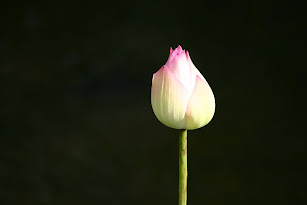
There's a plant called lotus that perfectly fits the description for the story in one esteemed respect--tasty cuisine. The Indian lotus does more than just sit and look pretty. Its roots, seeds, flowers, and leaves are all delicious. Steep tea from the petals, leaves, and stamens. Eat the seeds raw, pop them in a pan like popcorn, boil them in a fruit tea, or mash them up and stuff the paste into mochi or pastry. Peel the roots, slice them thin, and boil them in chicken broth until tender; serve with rice. Or pickle them, then slice, toss with herbs, cooked shrimp, shredded pickled carrots and daikon, and dress with fish sauce, peanuts and fried shallots. Tie it all up in a lotus leaf for convenient packaging, then unwrap, and you have your own plate--environmentally friendly, too.
Perhaps another grace that might save the Indian lotus from being implicated as the lotus in the Odyssey is the fact that the Indian lotus is not a lotus at all, technically. Real lotuses are legumes, a.k.a. bean plants. And it's not a waterlily either, but it's very similar. The lotus grows in the same kind of soil as the lily: mud. Please excuse the rather non-technical term. This mud, as messy as it sounds, contributes to one of the most important aspects of the lotus. Many cultures place deep symbolic meaning on the unspoiled splendor that rises from its inauspicious bed of muck. The Hindus associate the lotus with their most divine gods. The Buddhists equate the elegant lotus with Buddha, who himself became enlightened beneath a tree on the muddy shores of a river. From mud, the lotus blooms. Out of the crude, perfection.
On our patio, we have a lotus plant. It lives in a five gallon clay pot brimming with mud, water, and flecks of floating yellow-green duckweed. Eight rigid stalks, the color of emerald, rise above the water to chest height. Each stalk terminates in a single broad leaf like an elephant's ear. All stalks begin underwater, all curled up like a rolled tongue. They pierce the surface of the water and rise at a rate of nearly half a foot a day. So too does the teardrop shaped bud, which unfolds into a bloom with a canary yellow seed cup tucked away among the petals. From the time they emerge from the water, the lotus flowers grow to full height of five feet, blossom, and drop all their petals within 10 days, leaving only the stem and iconic seed cup. The petals are so heavy and full of body that you can hear them hit the ground when they drop from the flower.
Our lotus bears white flowers. The pure white lotus is the national flower of India; for Vietnam, it's the pink. The pink ones can be found in gardens and fountains all over the place in Saigon. Lữ says it's hard to find a white lotus plant here. The person who sold it to her must have thought it was pink--otherwise it would have cost much more. Of course, expense is a relative term. A bouquet of ten lotuses, cut in 30-inch long stems and wrapped in its own leaf, costs less than two dollars. Taken home, trimmed, and placed in a vase with water, they bloom overnight. And if you nuzzle your nose between the petals for a sniff, you'll find a spicy-sweet, tropical flavor. To me, it's faintly reminiscent of anise, which Mike confirmed in a blind sniff test. Lữ is not sold on the comparison, and prefers to describe them as having a fresh, green scent, which I also find to be true.
Our bouquet is already falling apart. With every pass of the oscillating fan, another white petal drops to the ground with a heavy tap. Like so many things in life, lotus blossoms do not last long. Soon after they bloom, they are gone, leaving you with a lovely memory and all of its trappings, like appreciation, wonder, and loss. Perhaps that's the reason why the lotus is a symbol for non-attachment. It invites us to admire its growth, appreciate its unstained beauty, watch it fade, and let it go. Although the lotus-eaters in Odysseus's story lost their desire to return home, they were still attached. They lusted for their lotus food. So, obviously, it was not the sacred lotus. And besides, I seem to remember the lotus in the story was a tree.
Saturday, July 2, 2011
Friday, July 1, 2011
Happy 5th, 8th and 4th Lunar Month!
Historically, the Vietnamese calendar was based on the astronomical observations in Beijing that dictate the Chinese lunar calendar. Therefore, both calendars always began on the same day, which is the first new moon of spring. However, Vietnam changed time zones in the 1960's. Since then, the two calendars still begin on the same day, except for once every twenty-three years or so. The next time these two calendars won't be aligned is in 2030.
Both the Vietnamese and the Chinese calendars are based on seasonal change, in which the beginning of the year marks the decline of winter and the rise of spring. In contrast to the seasonal approach, some other lunar calendars of Southeast Asia are based on the position of the sun in relationship to the stars--or more precisely, on the twelve constellations that are recognized in the west.
So, happy new moon, happy 5th month in the Chinese and Vietnamese lunar calendars, happy 8th month in the Buddhist and Muslim calendars, happy 4th month in the Hindu lunar calendar, and happy July, too!
Wednesday, June 29, 2011
Wonderin' Where the Lions Are
The last two posts have featured furry felines of the stone lion variety. I like a good triple play as much as anyone, so I thought I'd revisit my old home grounds in Singapore to bring you the third in our series on stone lions of Indochina. Here in all its fishy, fuzzy glory is one of the most surreal things ever turned out by the tourism industry: the Singapore merlion. This mythical aquatic animal is no creature of ancient mythology. It was completely fabricated about 50 years ago by the Singapore Tourism Board. You'll find the merlion on keychains, refrigerator magnets, and coffee mugs in souvenir shops all over the island. So, why a hybrid between a lion and a fish?
It all comes down to the history of the word Singapore. As the story goes, the island was named by a prince from an ancient Indonesian civilization called Srivijaya, who stumbled upon the island during a hunting trip. In the Srivijaya language, the word Singa means lion. This solves the mystery of the lion's half of the merlion (the lion's share, if you will). If I were to guess, the other half of the beast is to be fished out of Singapore's geography. As an island nation, Singapore identifies with the ocean through its strategic port and rich fishing grounds. Or maybe they just thought a merlion would be a good pet for a mermaid.
In the origin story of Singapore's name, the prince caught a glimpse of a big cat on the island. If he ever really saw one, it probably wasn't a lion. Tigers, on the other hand, have a historic range that extends all the way into Indonesia, including the extant Sumatran tiger, as well as the extinct Javan and Bali tigers. Seems to me the prince got his lions crossed.
It's worth a mention here that there is a lion that has range in Asia. It's called the Asiatic lion. Although it doesn't seem to have ever reached as far as Singapore, its easternmost range is adjacent to historic tiger territory. Realistically, the lion and the tiger territory never overlapped significantly. They probably avoided each other or vied for hunting grounds. But if hybridization had ever been a possibility, well, you Napolean Dynamite fans out there know exactly what that implies: real life wild ligers. It's like my favorite animal.
Another note on lions: Singapore has a pride or two that skulks about in the zoo on the north side of the island. It's particularly fun to visit them at night, during the zoo's nocturnal animal exhibit. All the animal enclosures are designed to look like they're not there. That means you feel like you're in the lion's space when you first see the pride through a break in the trees. Your body courses with the fight-or-flight sensation. This feeling is even stronger when you don't see them, when all you hear is throaty roars in the darkness. The lion's power stirs our instinctive sense of awe and terror, as old as time. It's no wonder why depictions of lions are so pervasive across world cultures.
So next time you see a statue of a lion, try to imagine that prehistoric sense of the predator and prey relationship. For a moment, pretend the stone softens to flesh, a heart starts to beat, the lungs swell with breath. Feel what it's like to stand in the presence of one of these beasts. And if it falls over and flops around gasping for air, maybe you could be nice and push it into the water.
It all comes down to the history of the word Singapore. As the story goes, the island was named by a prince from an ancient Indonesian civilization called Srivijaya, who stumbled upon the island during a hunting trip. In the Srivijaya language, the word Singa means lion. This solves the mystery of the lion's half of the merlion (the lion's share, if you will). If I were to guess, the other half of the beast is to be fished out of Singapore's geography. As an island nation, Singapore identifies with the ocean through its strategic port and rich fishing grounds. Or maybe they just thought a merlion would be a good pet for a mermaid.
In the origin story of Singapore's name, the prince caught a glimpse of a big cat on the island. If he ever really saw one, it probably wasn't a lion. Tigers, on the other hand, have a historic range that extends all the way into Indonesia, including the extant Sumatran tiger, as well as the extinct Javan and Bali tigers. Seems to me the prince got his lions crossed.
It's worth a mention here that there is a lion that has range in Asia. It's called the Asiatic lion. Although it doesn't seem to have ever reached as far as Singapore, its easternmost range is adjacent to historic tiger territory. Realistically, the lion and the tiger territory never overlapped significantly. They probably avoided each other or vied for hunting grounds. But if hybridization had ever been a possibility, well, you Napolean Dynamite fans out there know exactly what that implies: real life wild ligers. It's like my favorite animal.
Another note on lions: Singapore has a pride or two that skulks about in the zoo on the north side of the island. It's particularly fun to visit them at night, during the zoo's nocturnal animal exhibit. All the animal enclosures are designed to look like they're not there. That means you feel like you're in the lion's space when you first see the pride through a break in the trees. Your body courses with the fight-or-flight sensation. This feeling is even stronger when you don't see them, when all you hear is throaty roars in the darkness. The lion's power stirs our instinctive sense of awe and terror, as old as time. It's no wonder why depictions of lions are so pervasive across world cultures.
So next time you see a statue of a lion, try to imagine that prehistoric sense of the predator and prey relationship. For a moment, pretend the stone softens to flesh, a heart starts to beat, the lungs swell with breath. Feel what it's like to stand in the presence of one of these beasts. And if it falls over and flops around gasping for air, maybe you could be nice and push it into the water.
Subscribe to:
Posts (Atom)
